


Case Study: Liverpool Charity for Youth Employability
Liverpool-based charity supporting disadvantaged young people demonstrates the challenges and opportunities of digital and organisational transformation within a micro social impact organisation. Following a period of organisational inertia and reliance on COVID-related funding, a comprehensive review identified opportunities across governance, operations, finance, HR, digital systems and business development. The organisation began refocusing around a more person-centred model supporting disadvantaged young people, including digital inclusion and a new Futures programme. Positive feedback from funding applications indicated potential for the emerging model, although the charity ultimately closed in 2023. The experience highlights the importance of organisational readiness, sustainable income, effective governance and integrated digital transformation.
Transforming a Micro Charity: Digital Modernisation, Organisational Change and Sustainable Impact
Context
Micro and small socially trading organisations face a distinctive set of challenges. They are expected to deliver meaningful social impact while managing governance, finance, operations, digital systems, marketing and income generation, often with very limited resources and capacity.
A Liverpool-based charity supporting disadvantaged young people through entrepreneurship, employability and skills development, provides a practical example of these challenges. Originally established with significant support from a nationally recognised funder, the organisation’s continued operation from 2022 onwards was substantially supported by COVID-related grants and furlough assistance. While this support provided an essential lifeline, it also highlighted the need for a sustainable future operating model.
Following a period of organisational inertia, key areas including governance, finance, HR, operations, systems and business development had become stagnant. The challenge was therefore not simply to introduce new technology, but to consider how the organisation’s purpose, people, processes, governance, systems and financial model could be better aligned.
The Transformation
A broad organisational analysis identified opportunities to improve organisational effectiveness while reconnecting activities with the organisation’s core social purpose. The emerging approach sought to move from an organisation-led model towards a more community-led and person-centred approach, focused on helping young people develop confidence, digital capability, employability, entrepreneurial skills and pathways towards employment, self-employment and training.
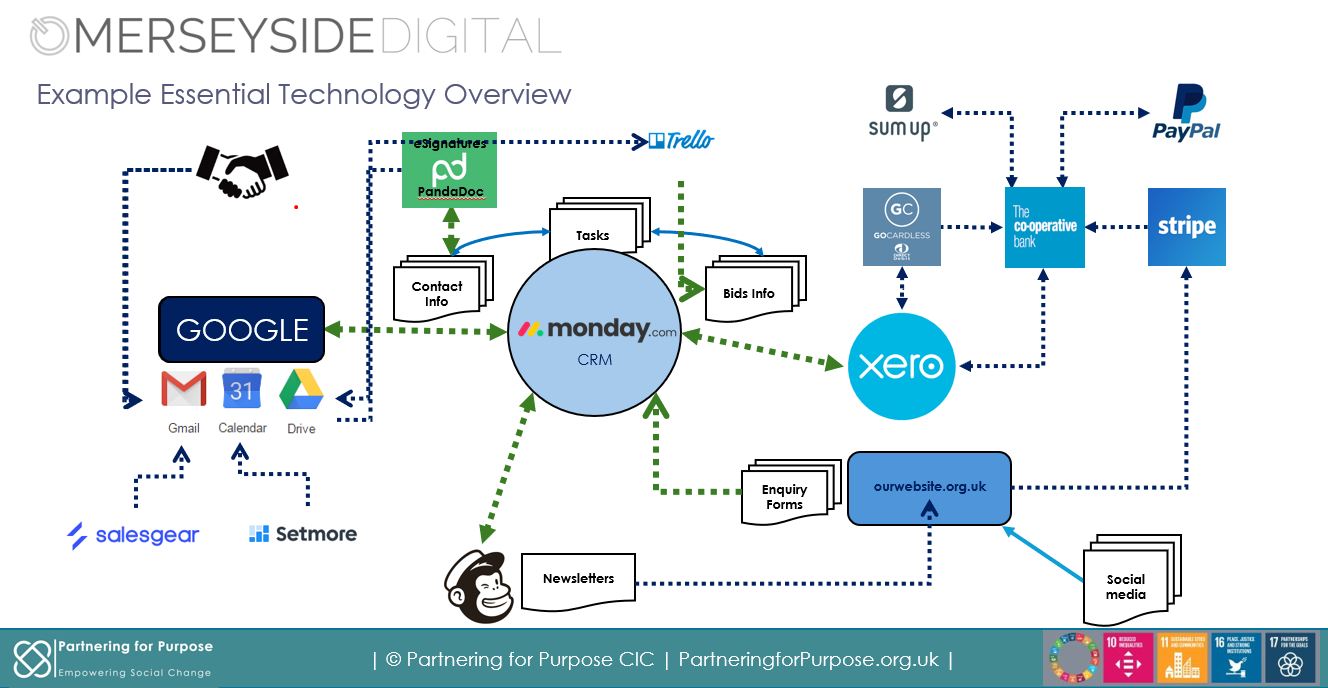
Digital transformation formed an important part of this work. Experience across technology projects, SMEs and larger organisations was applied proportionately to the needs of a micro charity. Areas included CRM and stakeholder information, workflow and process improvement, website development, email marketing, digital communications, lead tracking and digital inclusion.
A LearnMyWay digital inclusion initiative was developed, alongside opportunities for outreach through the Good Things Foundation. The objective was to demonstrate how digital technology could support both internal organisational efficiency and improved access to opportunities for disadvantaged communities.
Business development and financial sustainability were considered alongside digital and operational transformation. The organisation’s proposition, stakeholder relationships, marketing and income development strategy were reviewed, recognising that social impact and financial sustainability cannot be treated as separate issues.
Developing a Sustainable Future
The operational team subsequently developed a new Futures programme focus, designed around helping young people build skills, confidence and opportunities for their future. Funding applications received positive feedback, providing encouraging evidence that the emerging proposition had potential and that the organisation’s strategic refocusing was beginning to generate external interest.
However, the organisation’s financial position remained challenging. In December 2023, the trustees decided to cease the charity’s operations, meaning the new model could not be fully implemented.
Although the organisation did not continue, the experience provides valuable learning about the realities of transformation within small social impact organisations. It demonstrates that survival funding is not necessarily sustainability, and that successful transformation requires alignment between strategy, governance, operational capacity, digital capability and income generation.
Transferable Learning
The case demonstrates the value of a holistic approach to social impact transformation. Digital tools alone do not create organisational change; technology needs to be integrated with appropriate processes, skills, governance and organisational purpose.
It also highlights the importance of organisational readiness. Operational teams can identify opportunities, develop new propositions and pursue funding, but sustainable change ultimately requires collective commitment from governance and leadership.
The experience provides a strong foundation for supporting other micro and small charities, CICs and social enterprises facing similar challenges. It combines practical experience of digital transformation, organisational development, social impact, business development and change management, with an understanding of the resource constraints and governance complexities experienced by smaller purpose-led organisations.
Effective transformation in the social impact sector is not technology for its own sake. It is about aligning purpose, people, governance, processes, technology and sustainable income to enable organisations to create greater social value.
Case study prepared [2024]. Organisation did not continue but provides valuable learning about the realities of transformation within small social impact organisations.. All client and volunteer details anonymised for confidentiality.